Irregular Periods: Causes & When to See a Doctor | Starcare
Irregular periods are common, and their causes are often manageable. Stress, illness, a sudden change in routine, or life stages such as puberty, the years after childbirth and perimenopause can all shift a cycle. Persistent changes can also point to PCOS, a thyroid disorder or fibroids, which doctors check through a history, a pregnancy test and blood tests. If your cycle has changed and stayed changed, see a doctor, and Starcare Hospital can arrange the evaluation.
Irregular periods are a common concern at many stages of life. A cycle that comes earlier, arrives later or varies from month to month can be a normal variation, but persistent changes deserve attention.
Many causes are treatable, from hormonal imbalances and thyroid problems to conditions such as PCOS. This guide explains the causes of irregular periods, why they happen, how doctors investigate them and when to seek medical advice. If your cycle has changed and stays changed, Starcare Hospital can arrange a proper evaluation.
Causes of Irregular Periods
Cycle changes usually reflect a shift in ovulation or in the uterine lining. Cleveland Clinic defines an irregular period as one that comes early, late or not at all, or whose flow changes noticeably. The causes range from short-term stress to conditions that need treatment.
Hormonal causes of irregular periods
Hormone levels shift naturally during the first few years after periods begin, after childbirth and during perimenopause. NIDirect notes that hormone imbalance is common for a few years after puberty and before menopause. When oestrogen and progesterone fluctuate, ovulation can become unpredictable.
PCOS: the most common link to irregular periods
Polycystic ovary syndrome is one of the most frequent causes. It involves excess androgens that disrupt ovulation, so periods can become light, infrequent or absent. NIDirect describes the same pattern, because ovulation becomes less frequent.
Thyroid, fibroids and other conditions
Underactive and overactive thyroid disorders can both change cycle length and flow. These are a less common cause, but a simple blood test can check for them. Structural problems such as fibroids, polyps and endometriosis can also alter bleeding patterns.
Lifestyle and medication factors
Major weight change, intense exercise and stress can all interfere with ovulation. Hormonal birth control can also cause irregular bleeding. Irregularity can last up to six months after stopping the pill, according to Cleveland Clinic.
Why Are My Periods Irregular? Common Reasons for Irregular Periods
If you are wondering why your periods have changed, start with the most common explanations. Stress, illness and sudden changes in routine often trigger a temporary shift in timing. Cleveland Clinic lists stress and illness among everyday causes.
Common triggers include:
Stress, illness or an intense training schedule
Rapid weight gain or weight loss
Starting, stopping or switching hormonal contraception
Puberty, the years after childbirth, or perimenopause
Health direct groups these causes under lifestyle and life stages. Pregnancy should always be ruled out first whenever a period is late or missing, even if you use contraception.
Most cycle changes have an explainable cause. A change that persists for several months, however, deserves a proper review.
What Counts as Irregular Periods
A typical cycle runs from the first day of one period to the first day of the next, and it usually lasts 21 to 35 days. The bleeding itself typically lasts about three to seven days, according to Health direct. Those ranges are guides rather than strict rules, so a single unusual cycle is rarely a cause for alarm.
Normal cycle length
Cycles can shift by a few days from month to month without concern. Cycles can also be less predictable in the first few years after periods begin, a life stage that often settles over time.
How to tell if irregular periods are a pattern
Irregularity is defined by a pattern that persists. Cleveland Clinic gives these examples:
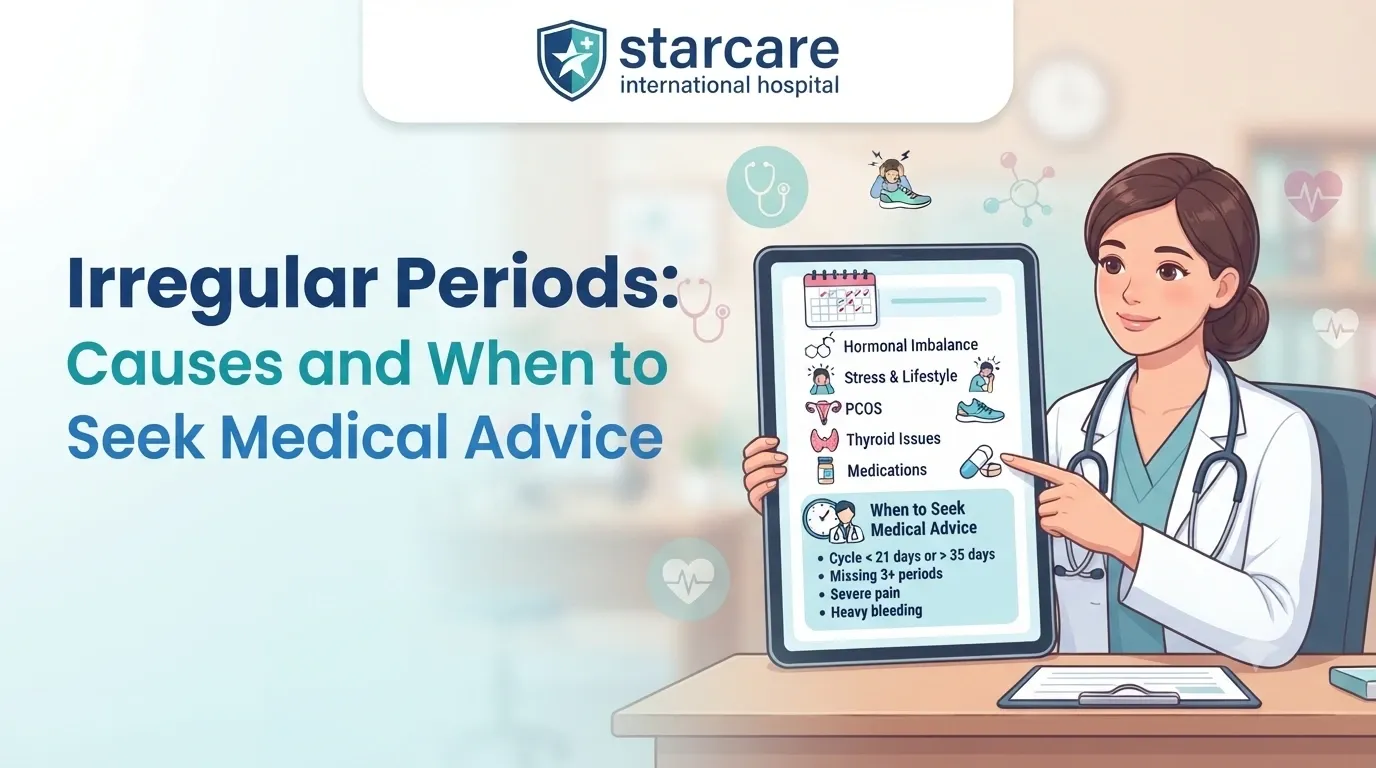
Cycles fewer than 21 or more than 35 days apart
Three or more consecutive missed periods
Flow that is much heavier or lighter than usual
Tracking dates, flow and any bleeding between periods for at least three months helps you and your doctor spot real patterns.
How Doctors Diagnose Irregular Periods
Diagnosis begins with a conversation and a record of your cycles. Your doctor will ask about your cycle pattern, flow, pain and any bleeding between periods, then examine you. Cleveland Clinic lists history, menstrual records, and physical and pelvic examinations as the starting point.
Ruling out pregnancy first
A pregnancy test comes first when a period is late or missing. Pregnancy and early pregnancy loss can both change the cycle, so they must be excluded before other causes are investigated.
Tests your doctor may order
Blood tests check thyroid function and can also assess prolactin and other hormone levels. Imaging can follow, and a pelvic ultrasound looks for fibroids, polyps or ovarian cysts. When bleeding is heavy or abnormal, an endometrial biopsy or hysteroscopy may be used to examine the uterine lining. Cleveland Clinic describes these options.
When to Seek Medical Advice for Irregular Periods
Book an appointment if any of the following apply:
Three or more consecutive periods are missed, or you have fewer than eight periods a year
Your cycle suddenly becomes irregular after a long stretch of regular periods
Periods arrive more than once a month or last longer than seven days
You bleed between periods or after sex
You have not started periods by age 16
Cycle changes occur alongside weight gain, tiredness or difficulty conceiving
These criteria draw on guidance from Healthdirect, NIDirect and Cleveland Clinic.
Seek urgent care if very heavy bleeding soaks a pad or tampon every hour for two to three hours. Fever, vomiting, diarrhoea, fainting or dizziness during a period can signal toxic shock syndrome, which also needs immediate attention.
Starcare Hospital can arrange an evaluation that includes a history review, a pregnancy test and blood work. A cycle diary covering at least three months gives your clinician far more to work with than memory alone.
Treatment Options for Irregular Periods
Treatment depends on the cause, and it is not always needed. NIDirect notes that treatment may not always be necessary, although you may need a different contraceptive or further tests to check for an underlying condition.
Medicines that regulate cycles
Hormonal contraception is often used to regulate cycles and reduce heavy bleeding. Medicines can also target specific causes, such as thyroid disorders or PCOS. Your doctor will weigh the benefits against your personal health history before recommending one.
Lifestyle changes that help
Regular sleep, balanced meals and moderate physical activity support a steady hormonal rhythm. Sudden crash dieting or extreme training can disrupt ovulation, so gradual changes tend to work better over time.
Conclusion: Taking Irregular Periods Seriously
Most causes of irregular periods are manageable, from temporary stress to hormonal shifts. Persistent or sudden changes, missed periods and bleeding between cycles deserve a proper assessment rather than guesswork.
Keeping a cycle diary and noting any warning signs gives your doctor a clear picture. If your periods have changed and stayed changed, Starcare Hospital can help you find the cause and plan the next steps.
Frequently Asked Questions About Irregular Periods
Can stress cause irregular periods?
Yes. Stress can delay or interrupt ovulation, so periods may arrive late or not at all. NIDirect lists stress among the lifestyle factors that disrupt the cycle, and cycles often settle once the pressure eases.
Are irregular periods a sign of PCOS?
They can be. Polycystic ovary syndrome is a common cause, but it is not the only explanation. A doctor can assess it through a clinical review and tests, rather than relying on symptoms alone.
How many periods a year is too few?
Healthdirect advises seeing a doctor when you have eight or fewer periods in a year.
Can irregular periods affect fertility?
They can make ovulation harder to predict and conception more difficult. Cleveland Clinic recommends seeing a specialist when you are trying to conceive with unpredictable periods.
Do birth control pills cause irregular periods?
They can. NIDirect notes that breakthrough bleeding is common when starting the pill and usually settles within the first few months. Cleveland Clinic adds that irregularity can last up to six months after stopping.
News & Updates...

Gallstones are hard deposits that form in the gallbladder, a small organ beneath the liver that stores bile. They usually develop when bile holds too much cholesterol or bilirubin, or too few bile salts. Risk rises with being female, being over 40, having a family history, obesity or rapid weight loss, and having diabetes or liver conditions. Most people feel nothing, but a stone that blocks a bile duct can cause upper right abdominal pain, and fever, jaundice or pale stools need prompt review. Doctors usually diagnose stones with an abdominal ultrasound and blood tests. Pain relief and smaller, lower-fat meals help manage attacks, but only gallbladder removal permanently prevents them, and surgery is generally reserved for recurring attacks or complications.
High blood pressure, or hypertension, often starts in the twenties and thirties without warning signs, so it can go unnoticed for years. Lifestyle factors such as weight gain, a high-salt diet, smoking, heavy drinking, inactivity, poor sleep and stress raise the risk, and family history or conditions like kidney disease, thyroid disorders and sleep apnoea can contribute. Untreated, it strains the heart, brain, kidneys and eyes long before symptoms appear. Daily habits can lower it: a vegetable-rich, lower-salt diet, regular aerobic exercise, limited alcohol, quitting tobacco and better sleep. Repeated readings of 130/80 mm Hg or higher warrant a check-up, and very high readings with symptoms need emergency care.